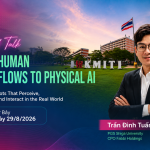
According to Mr. Bach, one of the experts behind Fabbi’s AI technical capabilities, this is one of the biggest challenges that makes applying AI in real business environments much more difficult than it often appears in technology demos.
An obvious error is often easy to detect. In contrast, a result that merely “appears to be correct” is more likely to be trusted, more easily embedded into operational workflows, and therefore capable of creating risks that are significantly more difficult to identify.
Drawing on years of research in software verification and automated bug fixing, Mr. Bach argues that enabling AI to generate outputs has never been the most difficult aspect. The greater challenge lies in ensuring that such outputs are sufficiently reliable for practical implementation. In enterprise environments, a robust system is not defined solely by its ability to “produce results,” but also by its capacity to maintain long-term operational stability, deliver outputs that have been validated for accuracy, ensure performance and security, and integrate seamlessly into existing infrastructures without introducing additional risks.
This is also why, in software engineering, verification consistently precedes bug fixing. A system that “functions” has never necessarily been synonymous with a system that is “enterprise-ready.” At present, AI can effectively support developers in handling fundamental programming tasks. However, in complex systems, particularly those involving distributed systems, automation, performance optimization, or security, human expertise continues to play an indispensable role in final verification and validation prior to deployment.
This principle also underpins the approach pursued by Mr. Bach and Fabbi’s engineering team in developing AI solutions for enterprises. Rather than treating AI as an isolated “feature,” Fabbi approaches AI as an integral component of the broader operational ecosystem, where every factor from accuracy, scalability, and performance to security – is continuously verified and optimized.
In a context where AI is increasingly becoming a mission-critical strategy for enterprises, competitive advantage will not belong to AI systems that are merely “more impressive,” but to those that are sufficiently reliable to support sustainable long-term business operations.